
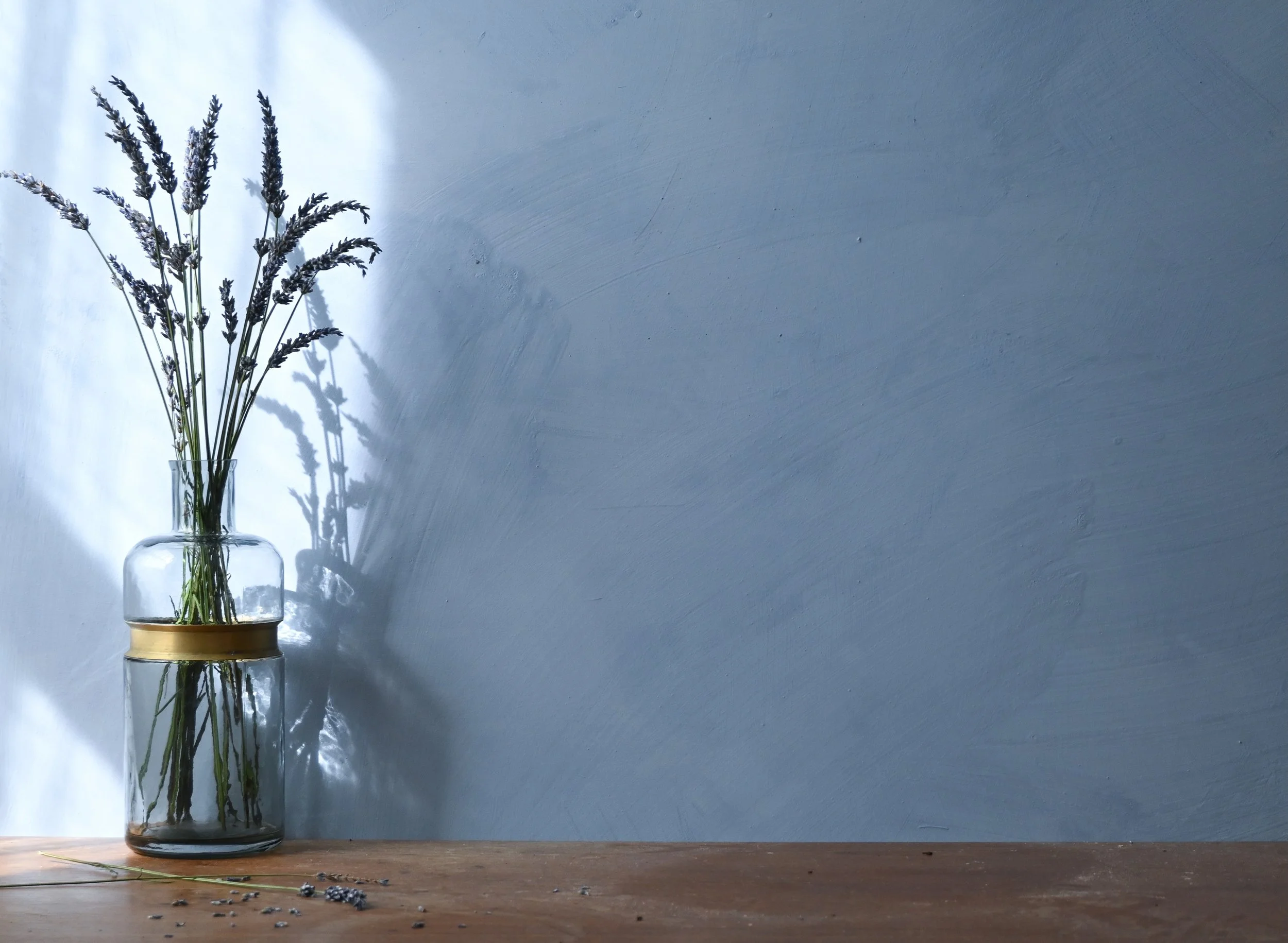
About Our Lime Wash
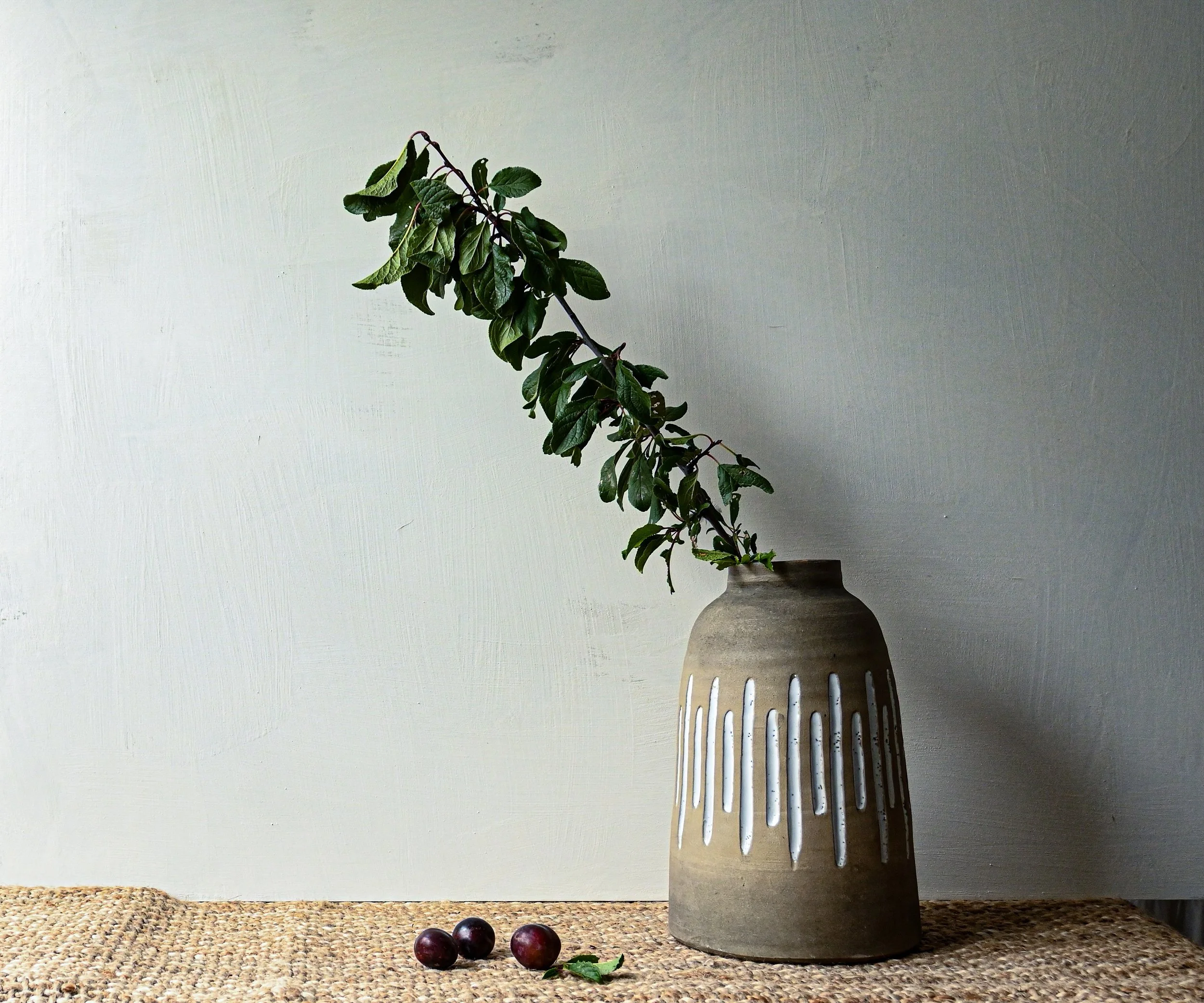
Through every architectural style and vernacular tradition since the neolithic age, humans have used lime to build, sculpt and decorate. And for good reason. Lime is alchemical - almost literally. Its microscopic crystalline structure makes it unlike any other material and is the secret to the way it changes with the light, soothes the senses and cleans the air. It goes on as liquid and cures as stone. It permeates the space with a soft mineral depth, stable and elemental, and at the end of its life, it melts back into the soil, simple calcium carbonate, one of the most abundant compounds in the Earth’s crust. This is what our ancestors understood: the finest finishes aren't just applied to buildings; they become part of them.
The Patina Factory honours these traditions, using natural seaweed binders to enhance lime's properties. Funori-ita, an extract of the gloiopeltis seaweed species native to Japan’s Okinawa coast line, has been used as a binder for lime based finishes for centuries. This strong natural binder has a special relationship with lime, demonstrated by the unparalleled depth and subtlety of Japanese interior surfaces.
This combination of lime and funori is the DNA of The Patina Factory lime-washes which, together with our range of mineral and oxide pigments, makes our paints breathable, natural, and luminous, the perfect combination of healthy and beautiful.
Meet The Maker –
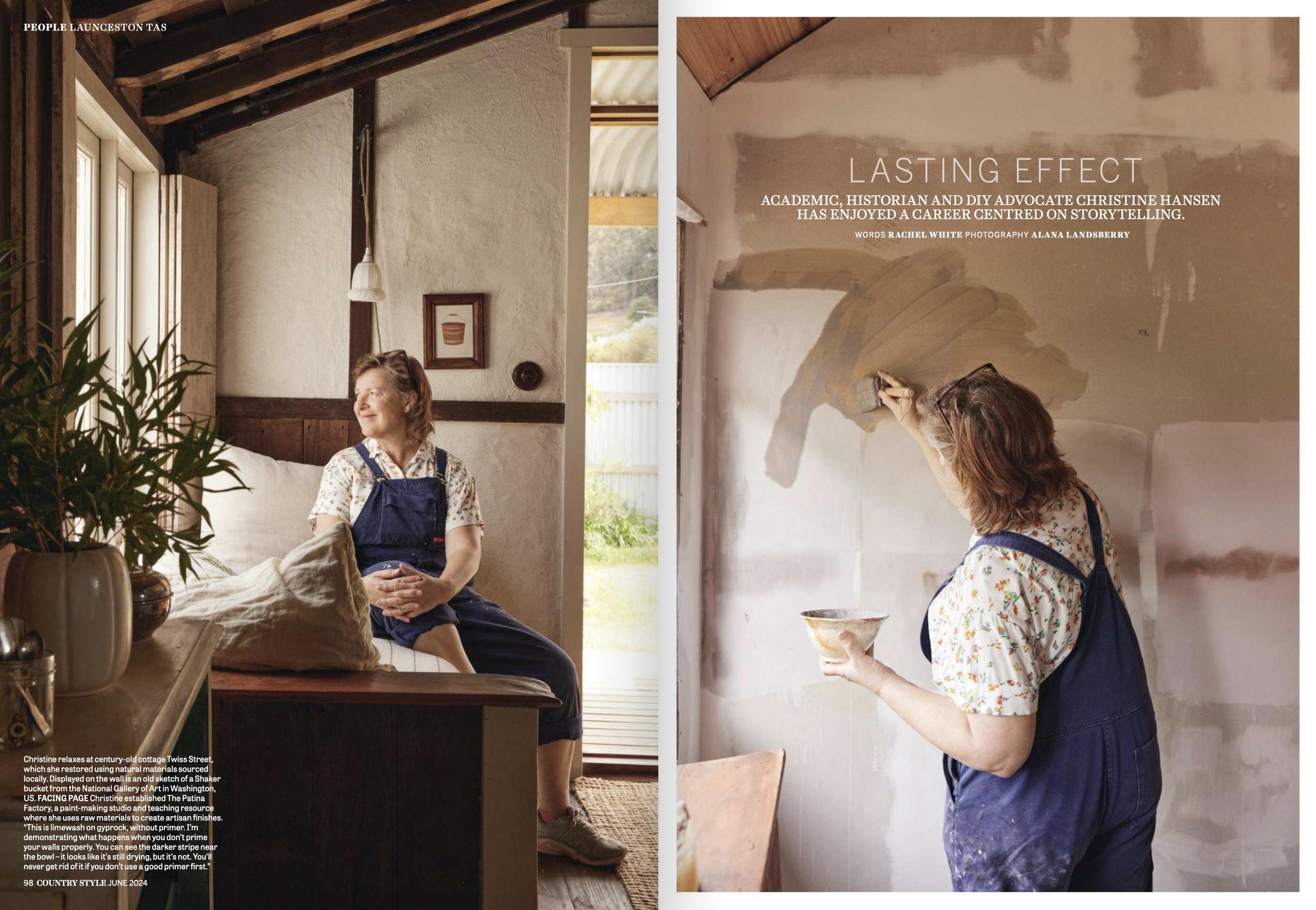
Christine Hansen
Christine's background in historical research and material culture informs every aspect of The Patina Factory. Her PhD research focused on how materials shape cultural narratives and human experience. This work led directly to The Patina Factory's mission: recovering traditional techniques that represent centuries of refined knowledge, and making them accessible to those who understand that walls are more than just painted surfaces.
Based in Hobart, Tasmania, Christine continues research into traditional finishing techniques while overseeing production and providing technical consultation for heritage restoration and contemporary architectural projects throughout Australia.
Image Source: Country Style Magazine
Traditional and Contemporary
The Patina Factory began with a simple observation: the materials we use profoundly affect how we experience spaces. This wasn't abstract theory; it was something founder Christine Hansen encountered repeatedly in her work as a historian and curator specialising in material culture.
Studying traditional building techniques across Europe and Asia, Christine noticed that historic lime finishes possessed qualities absent in modern paint. They breathed. They transformed with light. They developed character rather than deteriorating. Most intriguingly, she found that for centuries Japanese artisans had been using seaweed extracts in lime finishes to achieve depth and luminosity that synthetic materials couldn't replicate.
Why had these superior techniques been largely abandoned in modern construction? And could they be recovered for contemporary use?
From Study to Application
Christine's research focused on two enduring traditions: Japanese artisans using funori-ita seaweed extract to achieve extraordinary subtlety and light-refracting properties, and Scandinavian preservation practices employing natural lime-based paints for breathability and longevity. Both shared a philosophy that the right materials, properly used, create surfaces that improve with age.
In the Australian market however, authentic limewash paint formulas were either difficult to source or had been compromised by synthetic binders prioritising convenience over performance and sustainability.
Perfecting the Formula
Developing The Patina Factory's limewash paint meant solving several problems simultaneously. The formula needed to honour traditional techniques while meeting practical demands: reliable coverage, consistent quality, ease of application across different surfaces, and stability during storage and transport.
Funori-ita proved essential. Derived from Gloiopeltis furcata, a red seaweed endemic to the rocky coastlines of Japan and the North Pacific, funori has been used in Japanese arts and architecture for centuries – from bookbinding to wall finishes – prized for its unique properties as a natural binding agent.
Unlike synthetic alternatives that seal surfaces, funori-ita doesn't block the lime's translucency, allowing the paint to build optical depth as light refracts through the crystalline structure. Modern synthetic binders achieve adhesion by creating a sealed surface; funori-ita achieves it while maintaining breathability and luminosity. It's the difference between a coating and an integration; between a surface that lives and breathes, and one that simply sits on top.
Sourcing quality funori-ita and integrating it into a stable, user-friendly formula required extensive development, but the result honours centuries of material wisdom while meeting contemporary performance demands.
The powdered format emerged as both practical solution and innovation. By eliminating water from the product, each batch is mixed fresh on-site, ensuring maximum potency while dramatically reducing packaging waste and transport emissions. What began as a performance consideration became a sustainability advantage.
The resulting limewash paint combines pure lime, natural pigments, funori-ita and other natural binders into The Patina Factory palette of carefully curated colours. Completely non-toxic, zero VOC, and free from the petrochemical and microplastic pollution that plagues acrylic-based paints.
Our commitment to health and well-being,
for People and the Planet
Made in Tasmania
Tasmania proved the ideal location for this work. The island's commitment to heritage preservation, its tradition of craftsmanship, and access to locally sourced lime aligned naturally with the project's values.
Beyond geography, Tasmania represents an approach: doing things properly, respecting materials, and taking the long view. From this base, The Patina Factory serves architects, interior designers, professional painters and homeowners throughout Australia who understand that material choices matter—aesthetically, functionally and environmentally.
Breathability
The breathability of lime paints is essential for historic houses and buildings constructed from natural materials. Lime is naturally vapour permeable, allowing moisture to be released and walls to fully dry, preventing mould and rising damp. The Patina Factory limewashes are fully vapour permeable and suitable for heritage projects.
Health Benefits
The highly alkaline nature of lime paints creates a naturally antifungal and antimicrobial environment, making it very difficult for mould to grow. As the limewash cures, the lime begins to absorb CO₂ from the atmosphere. Over the coming months and years, your limewash will continue to absorb CO₂, curing to a hard surface. This process cleans the air and provides a naturally antifungal / antimicrobial environment.
Sustainability
The Patina Factory limewash is made entirely from natural materials sourced with care. The funori-ita seaweed comes from family owned Japanese company, while all other ingredients are Australian—including hydrated lime derived from Tasmanian limestone. By reducing our paint to pure mineral ingredients in powdered form, we ship throughout Australia with minimal environmental impact: no heavy water, no bulky tins, just concentrated materials that travel light.
Traditional limewash techniques survived for centuries because they created surfaces that were beautiful, durable, and healthy for both inhabitants and buildings. Modern paint manufacturing is dependent on petro-chemical derived plastics that prevent buildings from breathing and deteriorate into microplastics. The Patina Factory returns to proven practices grounded in material science—creating surfaces that are naturally antibacterial, completely breathable, zero VOC, and made only from minerals and natural binders.
When your project is complete, sustainability continues. Our outer cardboard packaging can be recycled through regular recycling. The inner container is bioplastic made from sugarcane and can be composted at home, through your local council composting service, or included in plastic recycling. Any leftover paint can be left to dry and placed in regular rubbish - it's perfectly safe for landfill. The plant matter will decompose and the minerals will slowly be reabsorbed into the earth, leaving no lasting pollution.
This is natural limewash paint as it should be: honouring centuries of material wisdom while serving contemporary architectural needs.