Instructions
The Patina Factory limewash is a traditional fully breathable mineral paint formulated with natural binders. It is designed to create a softly textured finish that changes with the light. Limewash must be applied over a suitably absorbent mineral surface. Non-porous or previously painted walls require Lime Bridge as a preparatory coat.
Mixing
1 x 8-10 litre bucket
1 x 2 litre bucket
Room-temperature water (refer to packaging for amount)
Broad paint paddle or wooden spoon
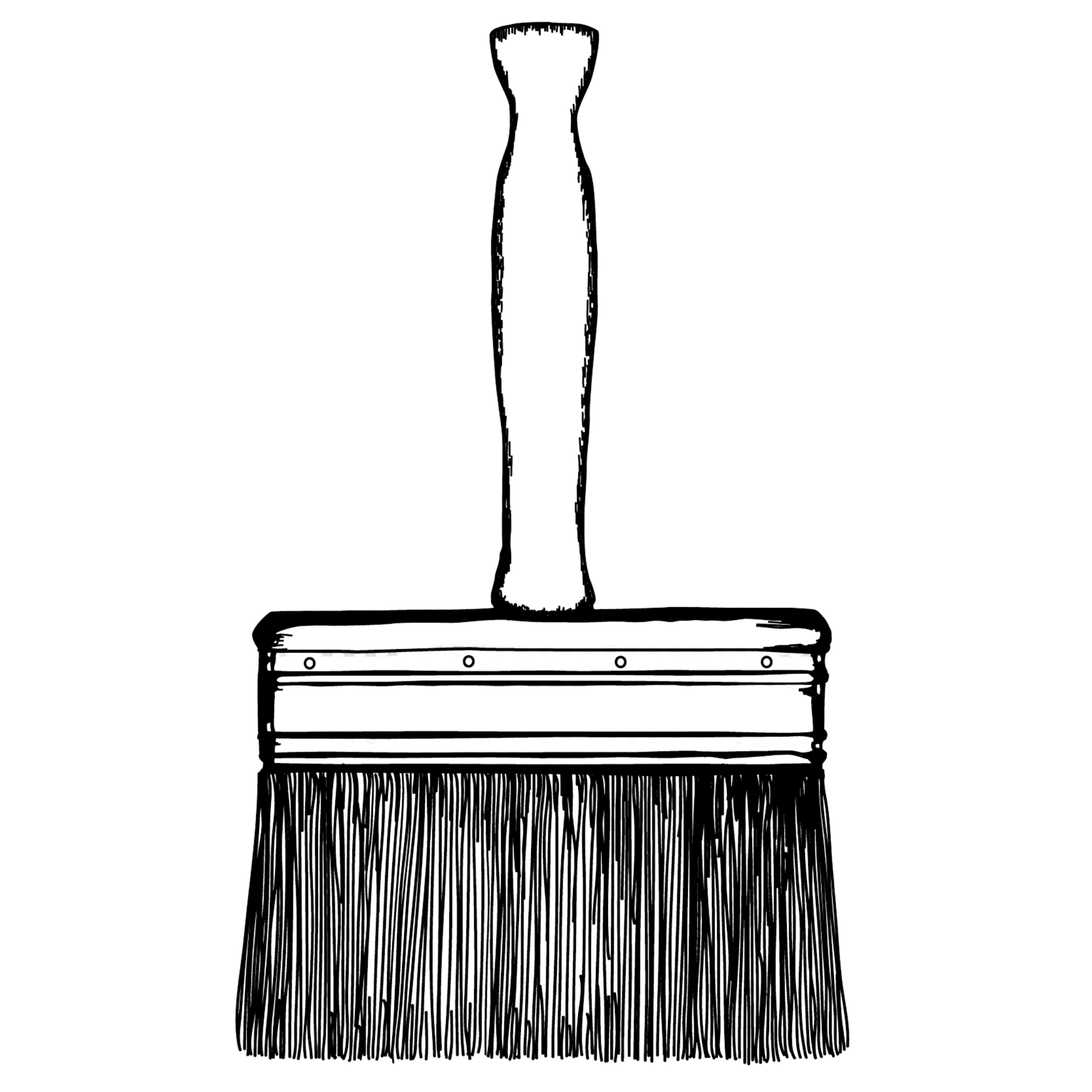
Natural bristle block brush
Masking tape, drop cloths as needed
Spray bottle
Mix powder in a well-ventilated area wearing appropriate safety equipment
Add water to large bucket.
Slowly sprinkle limewash powder while stirring gently. Avoid creating a vortex or using high-speed tools.
Stir until the powder is evenly combined. Continue stirring for approximately five minutes to ensure complete wetting.
Allow the mixture to rest for at least 10–15 minutes. This enables the minerals, natural binders and pigments to fully hydrate.
Use promptly once mixed and rested. Limewash is best used on day of mixing. If storing, keep in a sealed bucket in cool dark room away from heat. Use within three to four days. Stir before use. Unused powder can be stored in a dry, airtight container for up to 18 months.
Application
Decant 5–6 cm of paint into 2 litre bucket. Do not paint from a full bucket. Maintain a lightly damp surface throughout application to prevent brush drag. Mist the wall as you work as necessary.
Lime Wash: Apply thin, even coats. Work wet edge to wet edge using multidirectional strokes. Paint in large overlapping cloud patterns, short cross-hatched strokes or vertical lines, depending on the desired effect. Avoid over-brushing or revisiting drying areas – any parts missed will be picked up in the next coat.
Allow sufficient drying time between coats. Apply second coat after 8 hours minimum; overnight preferred. Do not paint over wet surface.
Avoid rapid drying from heaters, direct sun or strong airflow
Full cure: 14–21 days. Limewash continues to carbonate over several weeks. The final colour and finish refine as the lime hardens
Environmental Conditions
Apply between 8–30°C
Wipe splashes immediately
Never tip down sink (may harden in pipes)
For disposal: let solids settle, tip off water, dispose in compost/soil/rubbish when dry
Wash brushes in water and mild soap.
Preparation
What are you painting?
Stone, brick, mud/clay, terracotta, open concrete, previous lime wash, pure lime plaster - these are all porous surfaces that are friendly to Lime Wash. Make sure your surface is free of any grease, loose material or dust. Before painting wet down the wall sufficiently so that the paint sits on the surface but not so wet it runs. You don't need a primer on a porous wall unless you are covering a darker colour, in which case use two coats of Bright White Lime Wash. Very porous surfaces may need more than two coats. We advise using a sample on a test patch first.
For non-porous surfaces such as plaster board, patched or previously painted walls, apply two coats of high quality water-based primer to even out porosity followed by an undercoat of Lime Bridge to give the Lime Wash something to adhere to.
Apply ONE coat of Lime Bridge in horizontal strokes. Do not go over already painted surfaces or overwork on application. Allow to fully dry - ideally 24 hours.
Always use:
Dust mask (when handling powder)
Gloves
Safety glasses
If splashed on skin, rinse immediatelyWhat You Will Need
Hydration
The amount of water to add is noted on your packaging but hydration for lime wash is traditionally expressed as ‘the consistency of full cream milk’. This might be thinner than you were expecting but do not be tempted to make your mixture thicker - your paint will be at higher risk of cracking or blooming. The table below is a guide, but darker colours might take a little more, and hot weather might mean a water top up while you’re painting. Stick with the ‘milk’ test and you’ll have the correct consistency.
Lime Bridge Lime Wash
Sample 90ml Sample 160ml
10 m2 620ml 10 m2 1.1ltr
40 m2 2.5ltr 40 m2 4.5ltr
80 m2 5.0ltr 80 m2 9.0ltr
If saving powder for later use, remember to adjust amount of water.
For Lime Bridge add or subtract 180ml water for every 100gm powder
For Lime Wash add or subtract 350ml water for every 100gm powder
As a general rule of thumb, in warmer weather or if paint becomes overly thick, add water in very small amounts until it returns to the correct consistency. Limewash is applied as a very thin layers in multiple coats.
Tips and Tricks
Using a good quality block brush (sometimes called a limewash brush) is essential for achieving a proper finish. As limewash is applied in thin coats, regular paint brushes split the brush stroke leaving your paint patchy and streaky.
Limewash is applied as a thin coat which is slightly transparent on application. Depending on your colour, it might look like you’ve painted your wall with water. As it dries it will turn opaque and turn into the colour you ordered, ten times lighter than on application.
For easy application, make sure your two litre bucket is wide enough for a block brush and only fill with 5-6 cm at a time. This way your bush will always touch the bottom of the bucket without inundating the bristles.
Once your paint is mixed it is best used within 3 or 4 days. For longer storage, give the powder a good mix then spoon out whatever amount you want to save. You will need to adjust the amount of water by weighing the powder you want to mix and adding 300 ml for lime wash and 170 ml for lime bridge.
A successful limewash finish is always applied in multiple layers of at least two and for darker colours perhaps three. This is because light refracts and bends through the multiple calcite layers, creating an interior luminosity when hit by direct sunlight and a moody texture when in shade.
Try not to bump or touch your limwashed walls for a couple of weeks after painting. Although they will initially dry within a day or so, the lime will continue to absorb CO2 from the atmosphere for some weeks as it cures. While the process is taking place the lime remains fragile. Once curing is finished it is very robust and can withstand normal knocks and bumps.